


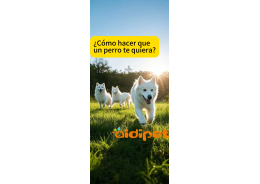
Dogs, as our loyal companions, have their unique ways of communicating with us, and body language plays a significant role in expressing their emotions. So, do you know how to tell if a dog is happy from its body language? Absolutely, there are several clear indicators.
A happy dog often has a relaxed posture. Its body will appear loose and at ease, not tensed up. The tail is usually a key giveaway. If a dog is wagging its tail vigorously from side to side, it's a strong sign of happiness. This wagging is often accompanied by a friendly facial expression. The dog's eyes will be bright and its mouth may be slightly open, with a gentle pant that seems to convey contentment.
Another indicator of a happy dog is its playful behavior. When a dog is happy, it may bow down with its front end lowered and its rear end up in the air. This is an invitation to play and shows that the dog is in a joyful and carefree mood. Also, a happy dog will often seek physical contact with its owner or other people it trusts. It may lean against you, nuzzle you, or even jump up to get your attention, all of which are expressions of affection and happiness.
On the other hand, there are some body language signals that can indicate the opposite of happiness. If a dog's tail is tucked between its legs, it may be feeling scared or anxious. A furrowed brow and exposed teeth can signify aggression or fear. And if a dog is cowering or avoiding eye contact, it could be indicating that it is uncomfortable or stressed.
In conclusion, by being observant of a dog's body language, we can gain a better understanding of its emotional state. A happy dog will display a combination of relaxed posture, wagging tail, friendly facial expression, playful behavior, and a desire for physical contact. By learning to interpret these signals, we can ensure that our furry friends are happy and content in their environment, strengthening the bond between us and them. So, next time you're with a dog, pay attention to its body language and try to decipher its happiness.




 English
 German
 French
 Russian
 Spanish
 Japanese
 Korean
 Khmer
Khmer Portuguese
 Ukrainian
 Arabic
 Italian
 Afrikaans
 Albanian
 Armenian
 Azerbaijani
 Basque
 Belarusian
 Bulgarian
 Catalan
 Croatian
 Czech
Czech Danish
 Dutch
Dutch Estonian
 Filipino
 Finnish
 Galician
 Georgian
 Greek
Greek Haitian Creole
 Hebrew
 Hindi
Hindi Hungarian
 Icelandic
 Indonesian
 Irish
Irish Latvian
 Lithuanian
 Macedonian
 Malay
Malay Maltese
 Norwegian
 Persian
 Polish
 Romanian
 Serbian
 Slovak
 Slovenian
 Swahili
 Swedish
 Thai
Thai Turkish
 Urdu
Urdu Vietnamese
 Welsh
Welsh Yiddish